Quick answer
A slab leak is a break in a water line running under or inside a concrete foundation, and the most common early sign is a warm spot on the floor from a hot-water line. Because the water stays under flooring and the slab, damage often spreads for weeks before anyone sees it. Knowing the signs helps you catch it before floors and walls fail.
Why Slab Foundations Hide Leaks
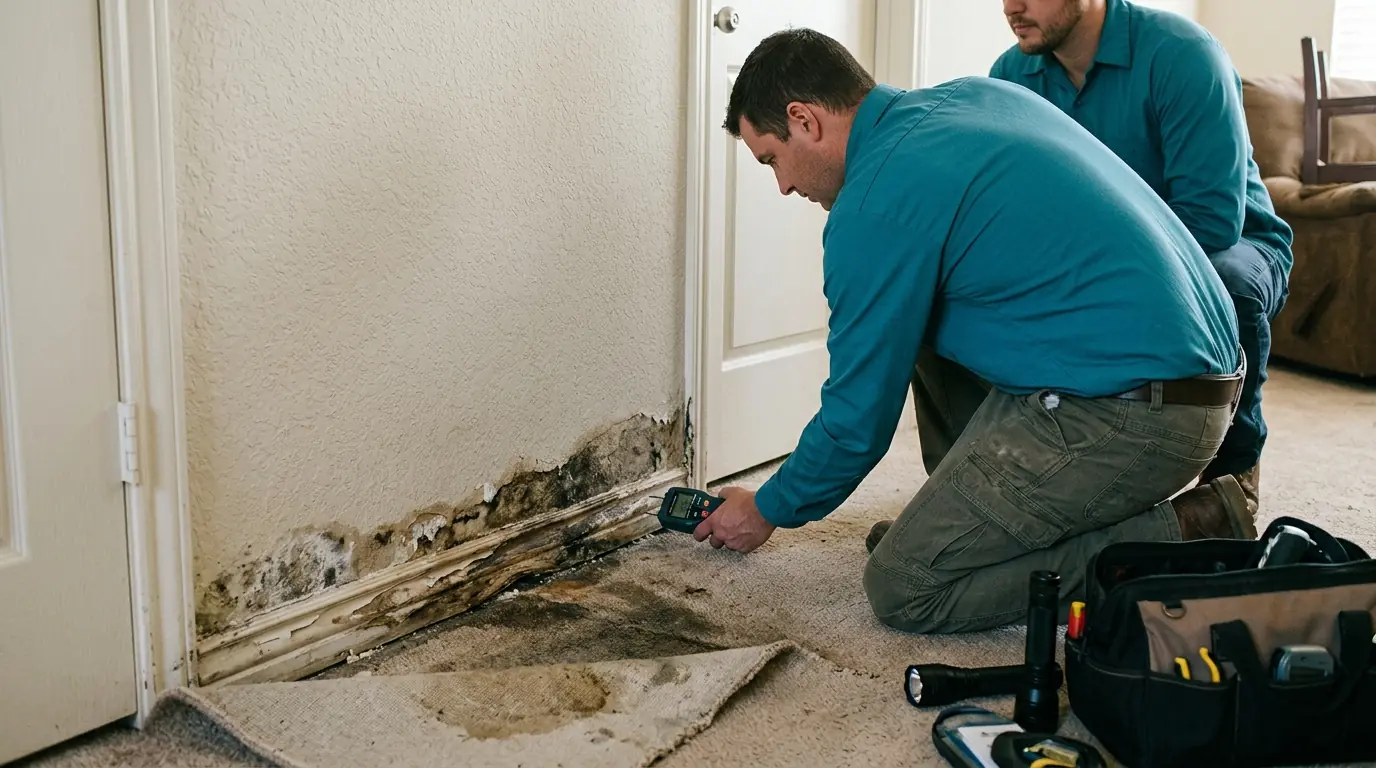
Many homes around Fort Worth, especially those built in recent decades, sit on slab-on-grade foundations, with copper or PEX supply lines running under or through the concrete. When one of those lines develops a pinhole or a crack, the water has nowhere obvious to go. It soaks the soil under the slab, wicks up through the concrete and gets trapped under flooring.
The soil matters too. Tarrant County's soils run from Blackland Prairie clay in the southeast to shallow clay over limestone and marl in the Grand Prairie belt. Clay swells when wet and shrinks when dry, so a leak under a slab can change how the soil supports the foundation. That's a question for a foundation professional, but it's one more reason not to ignore the signs.
Signs Inside the House
The clearest sign is a warm spot on the floor, often in a hallway or near the water heater, which points to a leak on a hot-water line. You might also hear water running when nothing in the house is on, or notice a damp patch on carpet with no visible source. Hard floors show it in their own way. Laminate swells at the seams, vinyl plank may lift, and tile can sound hollow when tapped as the thinset loses its bond. Baseboards on interior walls may swell or show staining, because water wicks up from the slab into the bottom of the drywall.
- A warm spot on tile or wood floors
- The sound of running water with every fixture off
- Damp carpet or a musty smell with no visible source
- Swelling laminate seams or hollow-sounding tile
- Stained or swollen baseboards on interior walls
Signs on the Bill and Around the House
A water bill that climbs without a change in use is often the first hint. To check, turn off every fixture and appliance that uses water, then look at the meter. If the dial or the leak indicator moves, water is going somewhere. Many plumbers start with exactly this test. Outside, look for wet soil along the foundation that stays wet in dry weather, or cracks in the slab or in walls that appeared suddenly. Low water pressure throughout the house can also point to a leak somewhere along the main supply.
Water Still Spreading While You Read This?
Shut off the source if you can, then call. We answer any hour and walk you through the next steps.
The Water Damage a Slab Leak Leaves
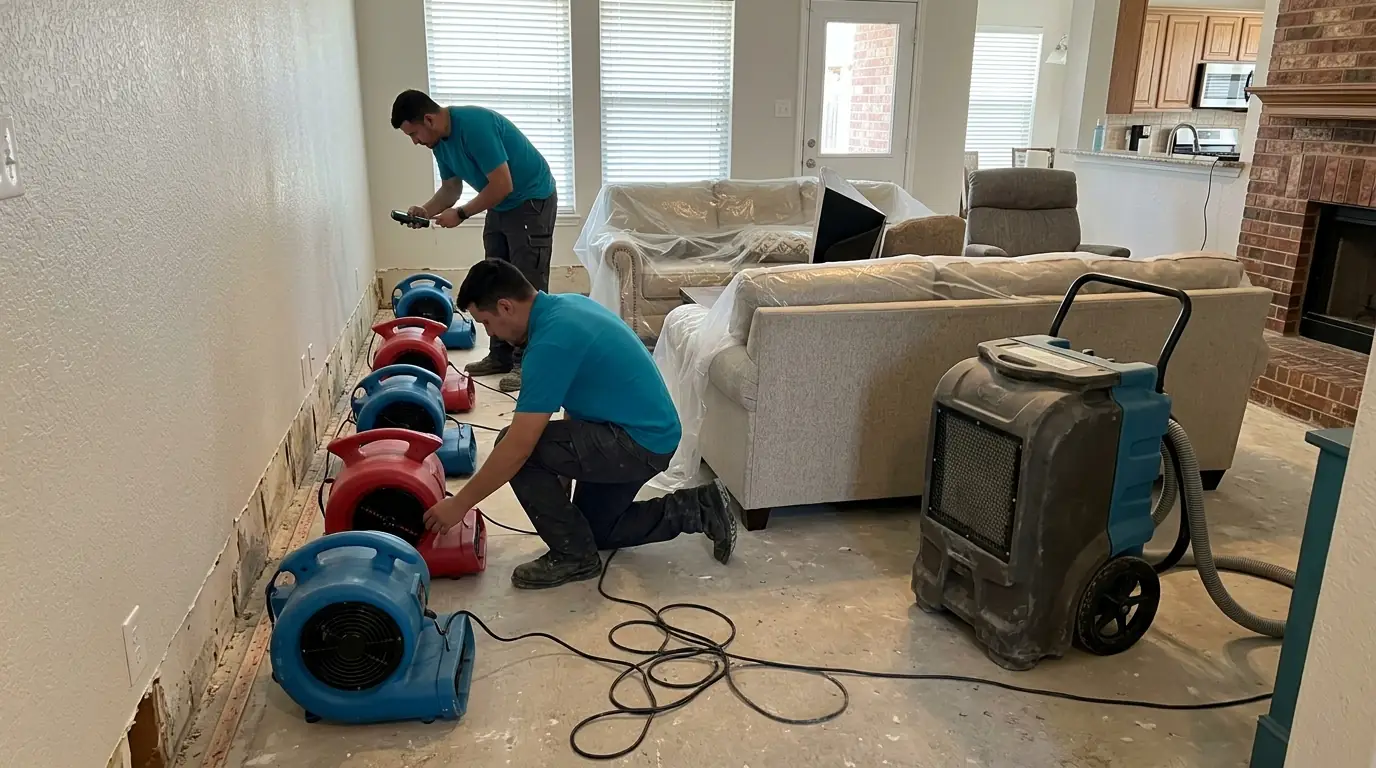
By the time a slab leak is found, the damage usually goes beyond one spot. Carpet pad has been wet for days or weeks. Laminate has swollen. The bottom of the drywall on nearby walls has wicked water up and may have started to grow mold. In some homes, water has also moved under cabinets and into closets. The plumber fixes the pipe, often by rerouting the line overhead or breaking into the slab to repair it. The water damage is a separate job: slab leak water damage work removes wet flooring and baseboards, opens the lower drywall where readings call for it, and dries the slab and walls. If the floor has to be replaced afterward, flooring replacement follows once the concrete reads dry.
Getting the Order of Repairs Right
Fix the leak first, then dry, then rebuild. It sounds obvious, but many homeowners are tempted to lay new flooring as soon as the pipe is repaired. Concrete holds water, and new laminate or vinyl over a damp slab traps that moisture, which often ends in mold and a second repair. We take moisture readings across the slab and compare them with a dry area of the same floor. When the wet zone reads close to that reference, the slab is ready for flooring. A moisture inspection after the plumber's repair is a good way to confirm nothing was missed.
When to Call a Plumber and When to Call Us
If you suspect a slab leak, a plumber with leak-detection equipment finds and repairs the pipe. If floors, carpet or walls are already wet, call for water damage work at the same time. Drying can start as soon as the leak is isolated, even before the final pipe repair is finished. If you're also seeing slow leaks from other parts of the house, our guide to the first hour after a leak covers what to do before help arrives.
Questions About This Topic
Turn off every faucet, appliance, irrigation zone and ice maker. Then look at the meter's leak indicator, usually a small triangle or dial. If it's turning, water is flowing somewhere. Write down the reading, wait an hour without using water and check again. A change points to a leak worth investigating.
Not always. Radiant heat, a duct running under the floor or sunlight through a window can warm a spot too. But a warm patch that appears suddenly, especially near the water heater or a bathroom, with no other explanation, is a classic sign of a hot-water line leaking under the slab.
Sometimes, if the water was clean and the carpet hasn't been wet long. The pad usually has to be replaced because it holds water against the slab. If the carpet has been wet for days, smells musty or shows staining, replacing it is usually the better choice.
Yes. Rerouting stops new water, but the water already under the flooring and in the concrete is still there. The slab and the lower walls have to be dried with dehumidifiers and air movers and checked with readings before new flooring or baseboards go back.
Yes. Water trapped under carpet pad, laminate or vinyl stays dark and damp, which is the kind of place mold grows. Removing the wet materials and drying the slab is what stops it. If mold is already visible on the pad or the bottom of drywall, it's removed as part of the cleanup.
Services Related to This Guide
Need Someone to Look at It Today?
We answer around the clock for Fort Worth and the surrounding area.