Quick answer
Water damage falls into three categories: Category 1 is clean water from a supply line, Category 2 is gray water with some contamination, and Category 3 is black water like sewage or floodwater. The category decides what can be dried and saved and what has to be removed, and clean water can degrade to a worse category if it sits for days.
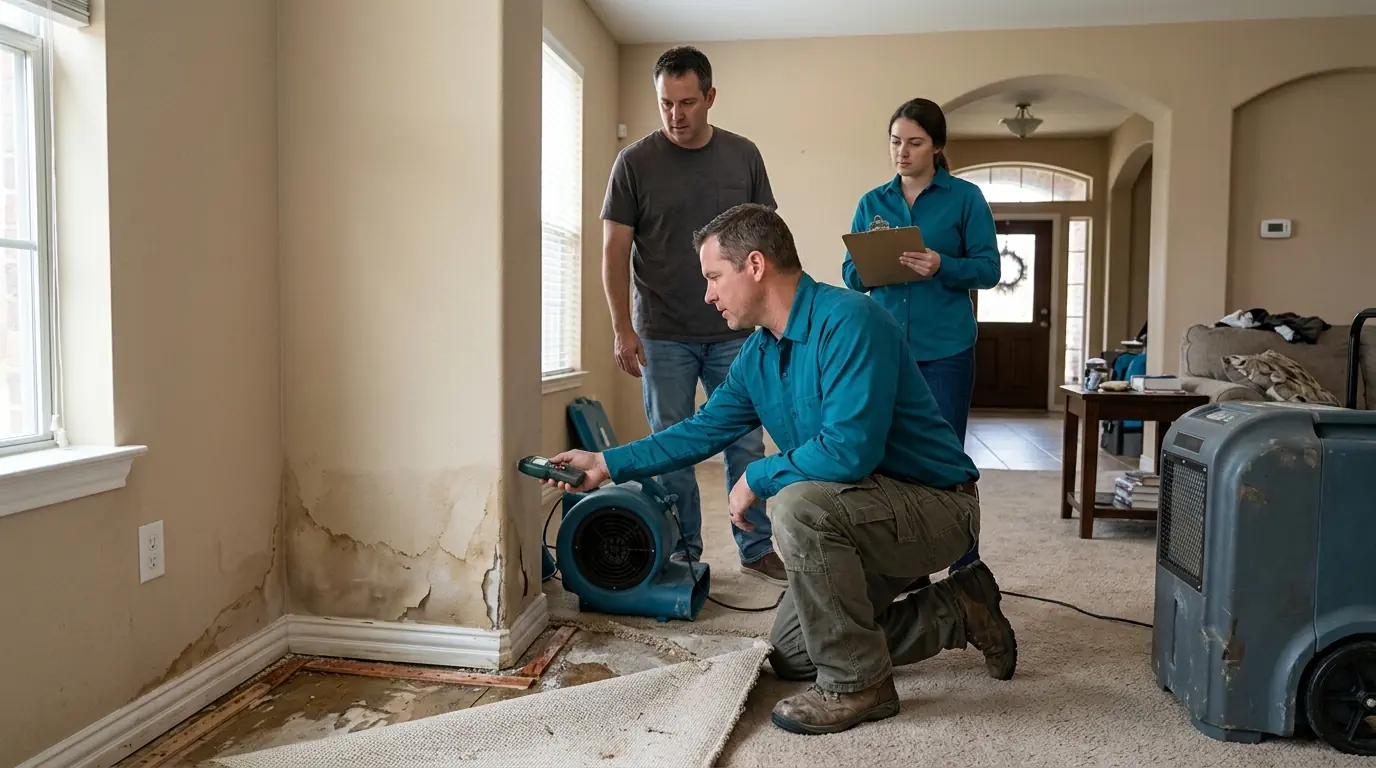
Category 1: Clean Water
Category 1 water comes from a clean source: a burst supply line, a broken water heater, an overflowing sink with no contaminants, or rain coming straight in through a window. It doesn't pose a health risk at the moment it leaks, which gives you the most options for drying in place. With clean water, carpet can often be dried and relaid with new pad, drywall that's still firm can often be dried without removal, and most belongings can be dried and kept. The key word is time. Clean water that sits on carpet, in wall cavities or under floors for a couple of days starts picking up contaminants from the materials it touches.
- Burst or split supply lines
- Water heater and appliance supply leaks
- Rain through a window or roof opening, caught quickly
Category 2: Gray Water
Category 2 water carries some contamination that can make people sick if they come into contact with it or swallow it. Common sources are washing machine drain water, dishwasher discharge, toilet overflows with urine but no feces, and aquarium or water bed leaks. AC condensate that has sat in a dirty pan can fall here too. Gray water changes the cleanup. Carpet pad that soaks it up is usually removed. Carpet may be saved depending on how long it was wet and how heavily it was affected. Hard surfaces get cleaned with antimicrobial products after extraction. Porous belongings like stuffed toys and mattresses that absorbed gray water are often not worth keeping.
- Washing machine and dishwasher drain water
- Toilet overflows without solid waste
- Clean water that has sat for a day or two
Category 3: Black Water
Category 3 water is grossly contaminated and can contain bacteria, viruses and other harmful material. Sewage backups, toilet overflows with waste, and floodwater from rivers, creeks or streets all belong here. In Fort Worth, the 1949 flood along the Clear and West Forks of the Trinity killed 10 people and left more than 13,000 homeless, and floodwater like that carries everything it passes over. With black water, porous materials it touches usually have to go: carpet, pad, lower drywall, insulation and upholstered furniture. Hard surfaces are cleaned and disinfected. The work is done with protective gear, and the affected area is kept separate from the rest of the house. Sewage cleanup and flood damage cleanup both follow this approach.
Water Still Spreading While You Read This?
Shut off the source if you can, then call. We answer any hour and walk you through the next steps.
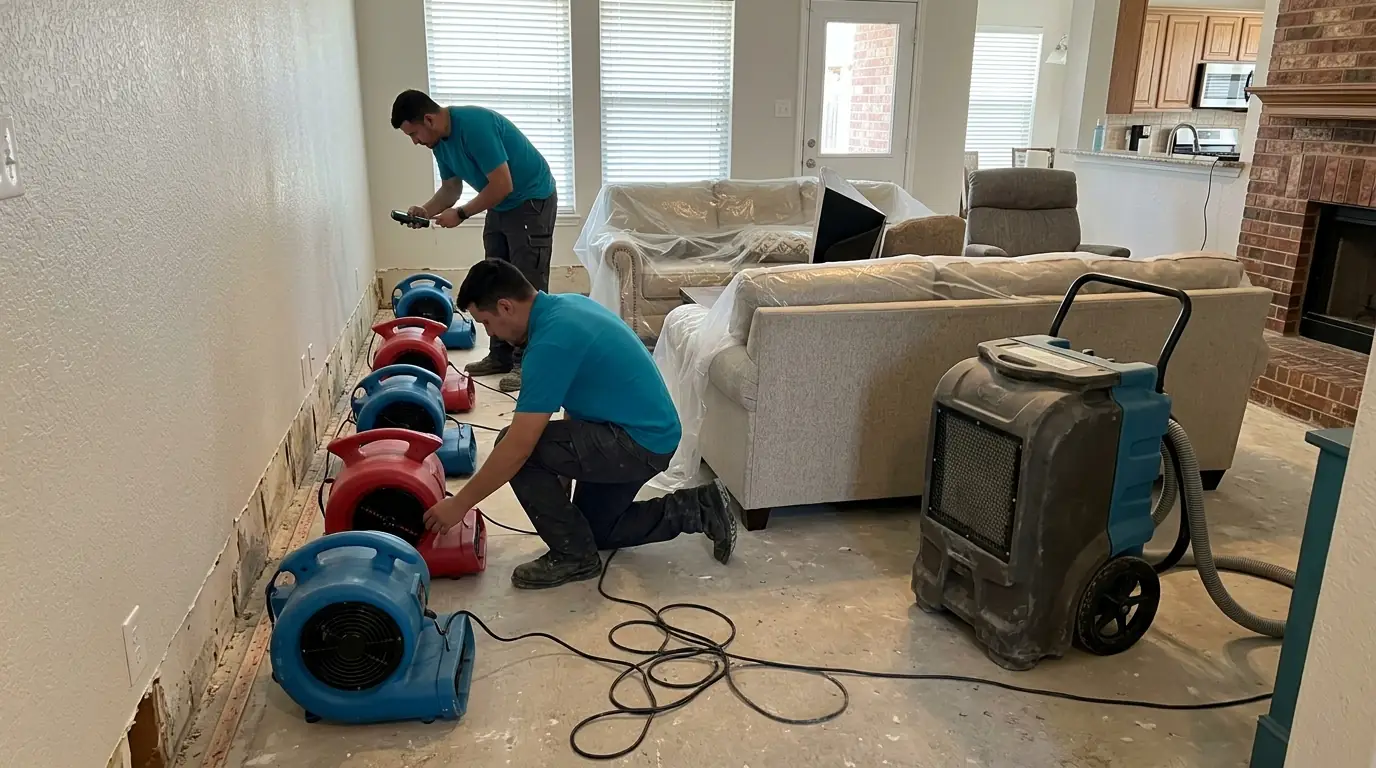
How Clean Water Turns Into Gray or Black
A category isn't fixed. Clean water from a supply line that soaks carpet for two or three days in a warm house picks up dirt, pet residue and whatever bacteria was in the pad. It's no longer clean. Water that runs across a dirty floor, or through a wall and into a crawl space, also picks up contamination along the way. This is one of the most practical reasons to start drying fast. A clean-water leak handled the same day often means drying and keeping carpet and drywall. The same leak discovered after a long weekend may mean removing both.
What Each Category Means for Your Belongings
Hard, nonporous items like glass, metal, ceramic and sealed plastic can usually be cleaned and kept from any category. Porous items are the hard decisions. Clean-water soaked books, rugs and upholstered furniture may be dried. The same items exposed to sewage or floodwater usually aren't safe to keep, even if they look fine once dry. Clothing and fabrics can often be laundered after clean or gray water. After black water, many fabrics can still be cleaned by professional methods, but the cost may be more than the item is worth. Photograph anything you discard for your claim records first.
Staying Safe Around Contaminated Water
If you're unsure which category you're dealing with, treat it as the worse one. Keep children, pets and anyone with a weak immune system away from the area. Wear rubber boots and gloves if you have to walk through it. Wash hands well, and don't eat or drink in the affected rooms. Turn off the HVAC if it pulls air from a room with sewage, so contaminated air doesn't spread. Our guide on the first hour after a leak covers the safe early steps for any category. For gray or black water, water damage restoration work starts with the category assessment so the right materials come out.
Questions About This Topic
No. Washing machine drain water is usually Category 2, gray water. It contains soap, dirt and bacteria from clothes, but not human waste. It still calls for more careful cleanup than a clean supply leak, especially for carpet pad, which is usually removed after soaking up gray water.
It depends on what's in it. An overflow from the tank or a clogged bowl with clean water is often Category 1 or 2. An overflow with feces or from a sewer backup is Category 3. If you're not sure, treat it as Category 3 and keep people and pets away until it's cleaned.
Usually not. Category 3 water soaks into carpet fibers and pad, and cleaning doesn't reliably remove all the contamination. Most guidelines call for removing carpet and pad touched by sewage or floodwater. Hard flooring can often be cleaned and disinfected instead.
Fresh condensate is fairly clean, but water that has sat in a dirty drain pan or line, with algae or sludge, is closer to Category 2. If an AC overflow soaked a ceiling and insulation, treat the cleanup as gray water and remove saturated insulation rather than drying it in place.
Rain falling straight through a roof opening is usually treated as clean at first. Once it runs through dirty insulation, across attic debris or sits for days, it can degrade to Category 2. Storm floodwater coming in from the ground is different: that's Category 3 from the start.
Services Related to This Guide
Need Someone to Look at It Today?
We answer around the clock for Fort Worth and the surrounding area.