Quick answer
The first hour after a leak decides how much of your house you lose, because drywall starts wicking water upward within minutes and mold can follow in 24 to 48 hours. Stop the water, make the room electrically safe, move belongings out of the wet area and take photos. Those four steps limit the damage before any equipment arrives.
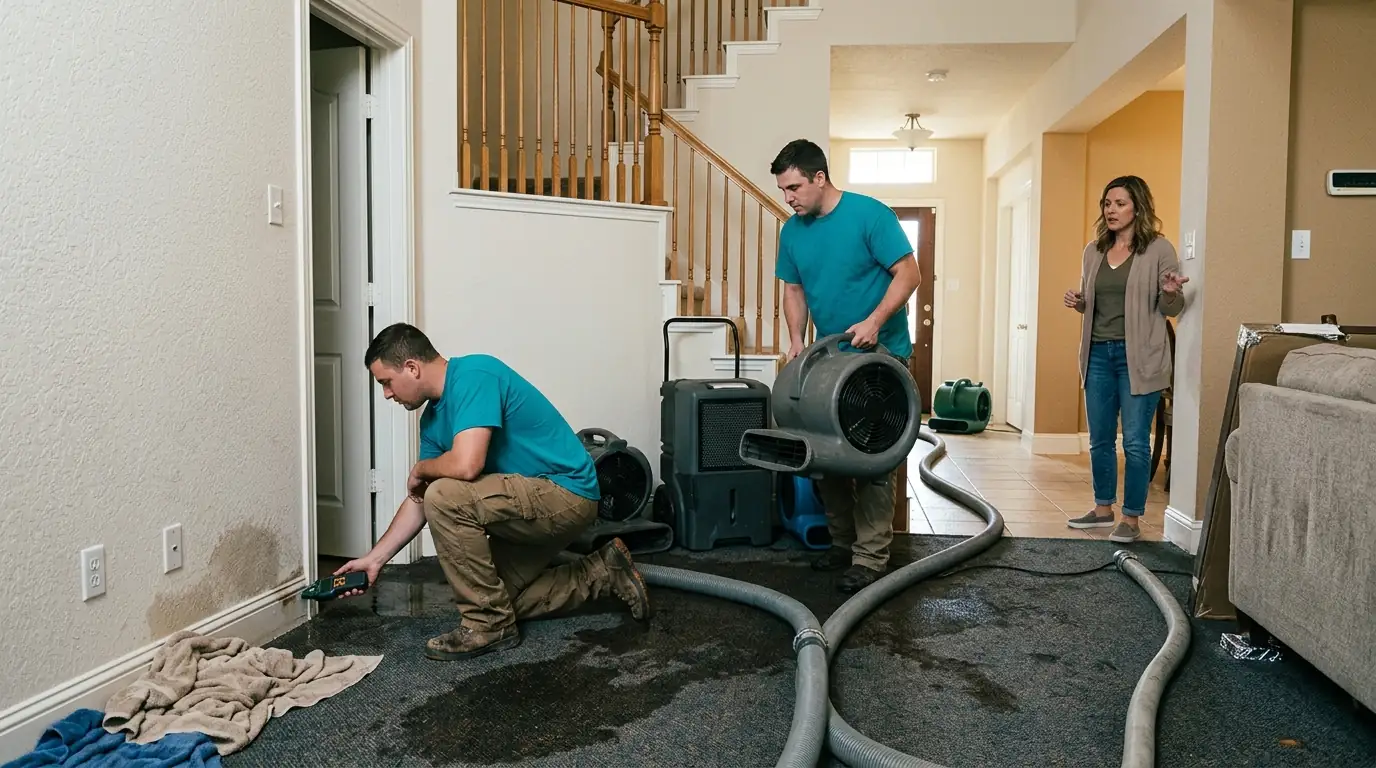
Stop the Water at the Source
Every minute of running water adds to the job, so the first move is shutting it off. For a burst supply line, a toilet or a sink, use the small valve behind or below the fixture. For anything you can't isolate, use the main shutoff. In most houses on a slab, it sits in a box near the street by the water meter or on the outside wall where the line enters the house. A meter key or a large adjustable wrench turns it.
If the water heater is leaking, close the cold-water valve on top and turn off its gas or its breaker. If water is coming from the roof or a window during a storm, you can't shut it off, but you can catch it. Put buckets under drips and move anything valuable away from that wall. Rain-driven leaks get worse as the storm goes on, so start on the cover early with emergency roof tarping.
- Fixture valve first, main shutoff if you can't find one
- Water heater: close the cold inlet and turn off gas or power
- Know where your main is before you need it
Make the Wet Rooms Electrically Safe
Water and electricity together are the biggest hazard in the first hour. If water is near outlets, cords, a power strip or a ceiling light, turn off the breaker for that area before you walk through it. Don't stand in water to reach the panel. If the panel itself is wet or you can't get to it without stepping in water, leave the room and wait for help. A ceiling that's bulging or dripping through a light fixture holds water on top of the drywall. Keep everyone out from under it. Turn off that circuit, put a bucket underneath and leave the ceiling alone until someone can drain it safely. Pushing on a sagging ceiling can bring the whole wet section down at once.
Move Belongings Out of the Water
Once the room is safe, start saving what you can. Lift electronics, rugs, books and paper off the floor first, since those are hardest to save once soaked. Slip aluminum foil or plastic under furniture legs so wood doesn't stain the carpet and metal doesn't leave rust rings. Pull curtains up off the floor and hang them over a rod. Area rugs should come out of the room because they hold water against the floor below. Photos and important papers can go into a freezer in zip bags if they're soaked; freezing slows damage until you can deal with them. Don't try to lift wet wall-to-wall carpet yourself. It's heavy when wet and the tack strip is sharp.
- Electronics, paper and rugs first
- Foil or plastic under furniture legs
- Soaked photos into zip bags and the freezer
Water Still Spreading While You Read This?
Shut off the source if you can, then call. We answer any hour and walk you through the next steps.
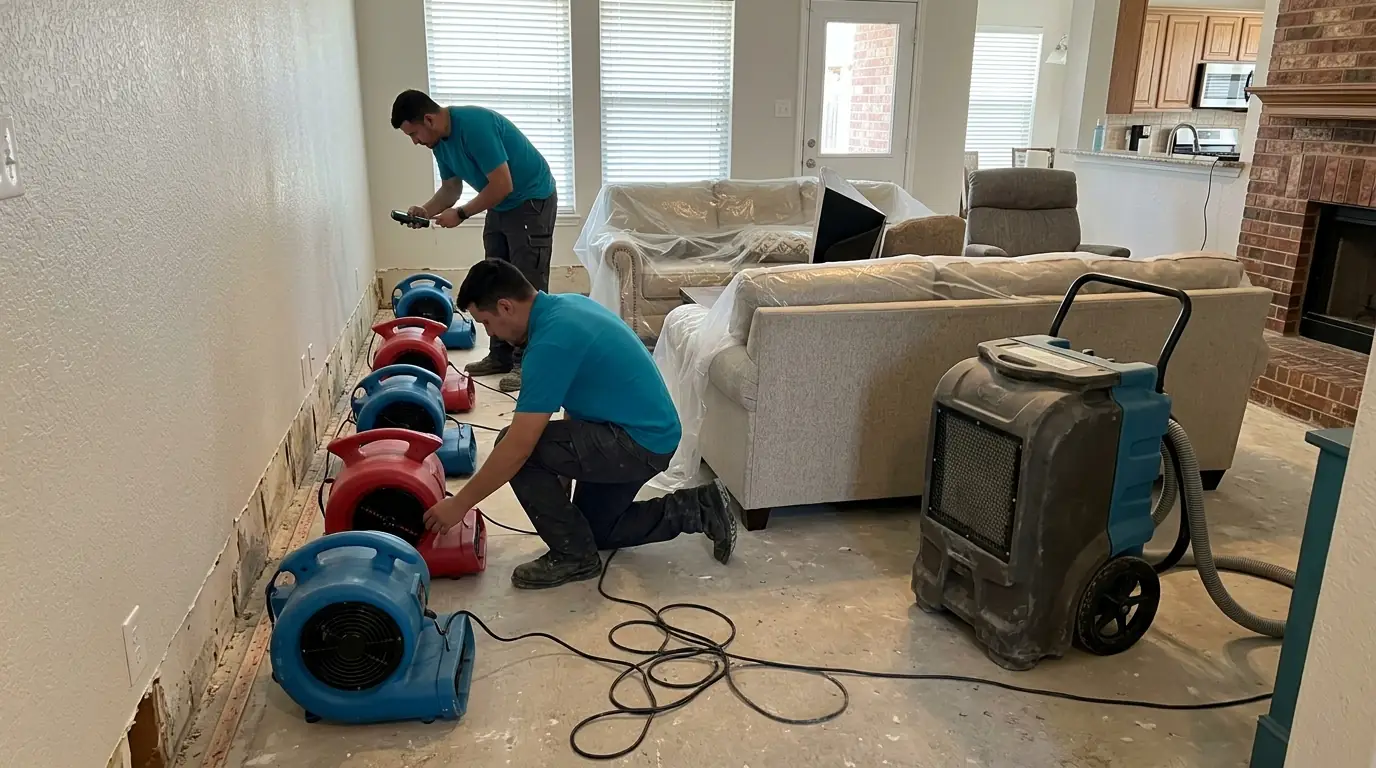
Take Photos Before Anything Is Cleaned Up
Before you mop, take pictures. Shoot each room wide from the doorway, then close up on the water line on walls, the source of the leak, damaged belongings and the floor. A short video walking through the house is also useful. If the source is a failed part, like a cracked supply line or a split fitting, keep it rather than throwing it away. These photos are your own record of what the damage looked like at its worst. They help if you file a claim, and they help us see how far the water spread before we arrive. Our guide on documenting water damage for insurance covers what else to keep.
Remove What Water You Safely Can
For clean water from a supply line or a sink, you can mop, towel and use a wet vacuum to pull water off hard floors. Open interior doors and run the AC to start pulling humidity out of the air. Don't run a household vacuum on wet floors, and don't use fans aimed at a wet wall if the water came from a toilet or a drain, because that spreads contaminated droplets. Sewage, toilet overflows with waste and floodwater from outside are a different job. That's Category 3 water, and it shouldn't be handled without protective gear. Keep kids and pets out and wait. Our guide on clean, gray and black water explains the difference in more detail.
Why Fort Worth Homes Need a Fast Start
Fort Worth averages about 37 inches of rain a year, most of it from March through June, so many leaks here arrive during spring storms when the house is already humid. Water that gets into drywall, carpet pad and the bottom plate of a wall keeps spreading after the visible puddle is gone. That hidden water is the reason the first hour matters. Once the source is off and the room is safe, the next step is extraction and drying with proper equipment. We answer 24/7, and emergency water extraction is where most of our water jobs start, followed by structural drying with moisture readings taken daily until the house is dry.
Questions About This Topic
If you can't isolate the leak with a fixture valve, yes. A small drip from a supply line can turn into a full break without warning, especially under pressure. Shutting the main costs you a little inconvenience and can save the floor. Turn it back on only once the leaking part is repaired or capped.
For clean water from a supply line, a wet vac can pull some water off the surface. It won't reach the pad underneath, which holds much more water than the carpet itself. Use it to limit the spread, then have the pad and floor checked with a moisture meter. Don't use it on sewage.
Usually, if the leak is stopped, the power is safe and the water was clean. Stay out of rooms with sagging ceilings or wet electrical. If the water was sewage or floodwater, or if the house has no working water or power, staying elsewhere for the first night is often the safer choice.
Keep the failed part, such as the split pipe section, the cracked supply line or the broken fitting. Keep damaged items you plan to claim until they're photographed and your adjuster says they can go. Receipts for anything you buy to deal with the leak, like buckets or a wet vac, are also worth keeping.
Drywall wicks water upward through its gypsum core, so the wet line often climbs for hours after the floor is dry. That's a sign water is inside the wall. The wall has to be read with a moisture meter and usually opened at the bottom so the cavity can dry.
Services Related to This Guide
Need Someone to Look at It Today?
We answer around the clock for Fort Worth and the surrounding area.