Quick answer
Frozen pipes burst in North Texas because many homes run supply lines through attics, exterior walls and uninsulated spaces, and during the February 2021 winter storm Fort Worth recorded more than 700 water main breaks. Protecting exposed lines before a freeze, and knowing how to shut the water off fast, is what keeps a cold night from becoming a flooded house.
What the February 2021 Freeze Showed Fort Worth
The February 2021 winter storm was the hardest test Fort Worth plumbing has faced in a long time. The city recorded more than 700 water main breaks, more than 300,000 people were placed under a boil-water notice, and three of the city's four treatment plants lost power. Outside the city, Cleburne went through one of its harshest freezes in recent memory that same month.
Inside homes, the damage followed a pattern. Pipes froze in attics, exterior walls and garages, then split. Many breaks didn't show until the thaw, when water started flowing again and poured out of a crack nobody could see. Grapevine's record low of minus 12 degrees Fahrenheit was also set in February, which is a reminder that a deep freeze here is rare, not impossible.
Which Pipes Freeze First in Texas Homes
Houses built for heat often route plumbing where cold reaches it easily. Lines that run through an attic to a second-floor bathroom, supply pipes in exterior walls behind a kitchen sink, and hose bibs on the north side of the house are the usual suspects. Water heaters in garages and pipes in pier-and-beam crawl spaces are also exposed. Copper splits cleanly when ice expands inside it. PEX is more forgiving and can stretch some, but its brass or plastic fittings can still crack. CPVC turns brittle in the cold. Whatever the material, the break often happens not where the ice forms, but between the ice and a closed faucet, where pressure builds up.
- Attic lines feeding upstairs bathrooms
- Supply pipes in exterior kitchen and bathroom walls
- Hose bibs and outdoor faucets
- Garage water heaters and crawl space piping
How to Protect Pipes Before a Hard Freeze
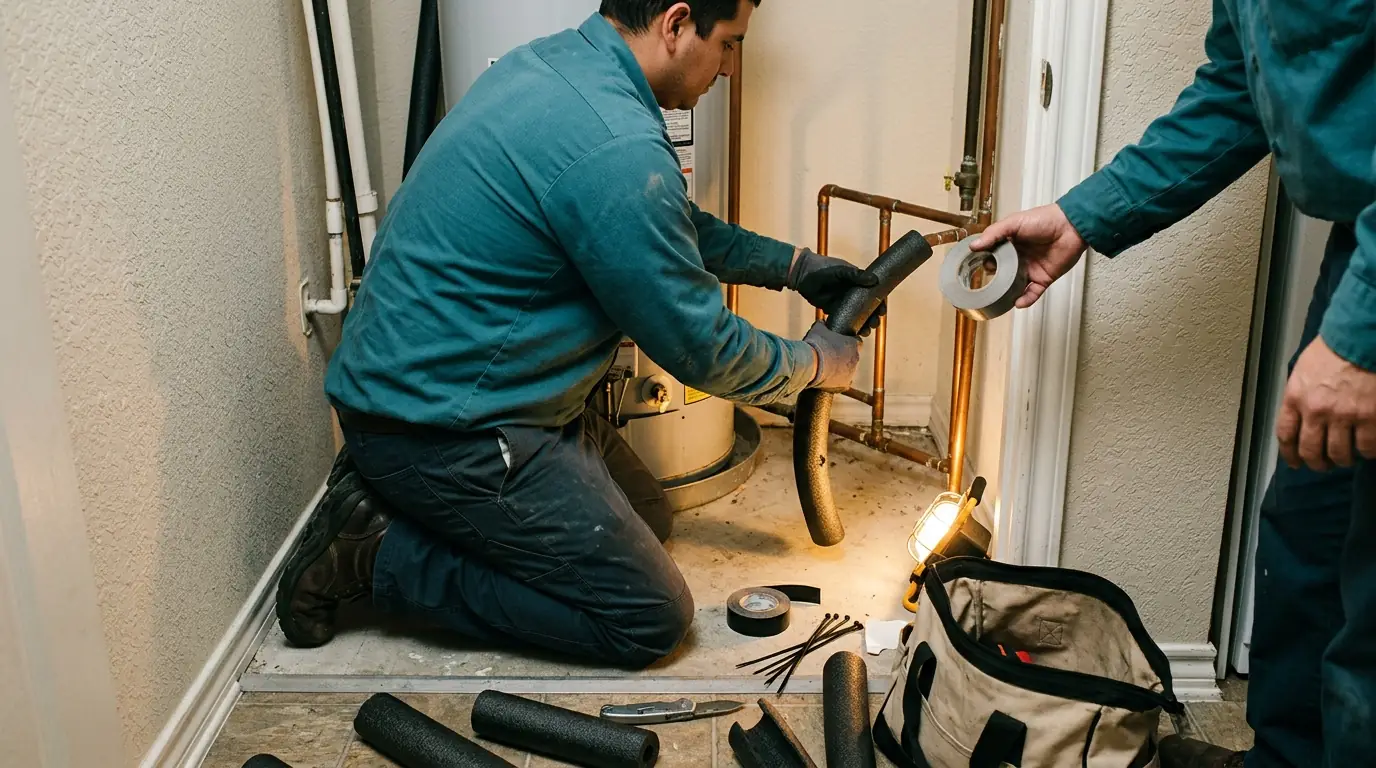
When a hard freeze is in the forecast, a few steps help a lot. Disconnect garden hoses and cover outdoor faucets with insulated caps. Open the cabinet doors under sinks on outside walls so warm room air reaches the pipes. Let faucets on exterior walls drip slowly, both hot and cold, which keeps water moving and relieves pressure if ice forms. Keep the thermostat steady, even at night and even if you leave town. Wrap exposed pipes in garages and crawl spaces with foam sleeves. If you have a pier-and-beam house, close the foundation vents. Most important, find your main shutoff before the freeze arrives and make sure you can turn it.
- Disconnect hoses and cap outdoor faucets
- Open sink cabinets on exterior walls
- Let exterior-wall faucets drip, hot and cold
- Locate and test the main shutoff
Water Still Spreading While You Read This?
Shut off the source if you can, then call. We answer any hour and walk you through the next steps.
If a Pipe Freezes but Hasn't Burst
If you turn on a faucet and nothing comes out, or only a trickle, a pipe is likely frozen. Leave the faucet open so water can flow once it thaws. Warm the area gradually with a hair dryer, a space heater kept well away from anything that burns, or warm towels. Never use an open flame or a torch on a pipe. Check the pipe as it thaws. If you see water spraying or dripping, or hear running water inside a wall, shut off the main right away. Thawing is the moment many hidden splits reveal themselves, so stay close to the house while the ice melts.
What to Do After a Pipe Bursts
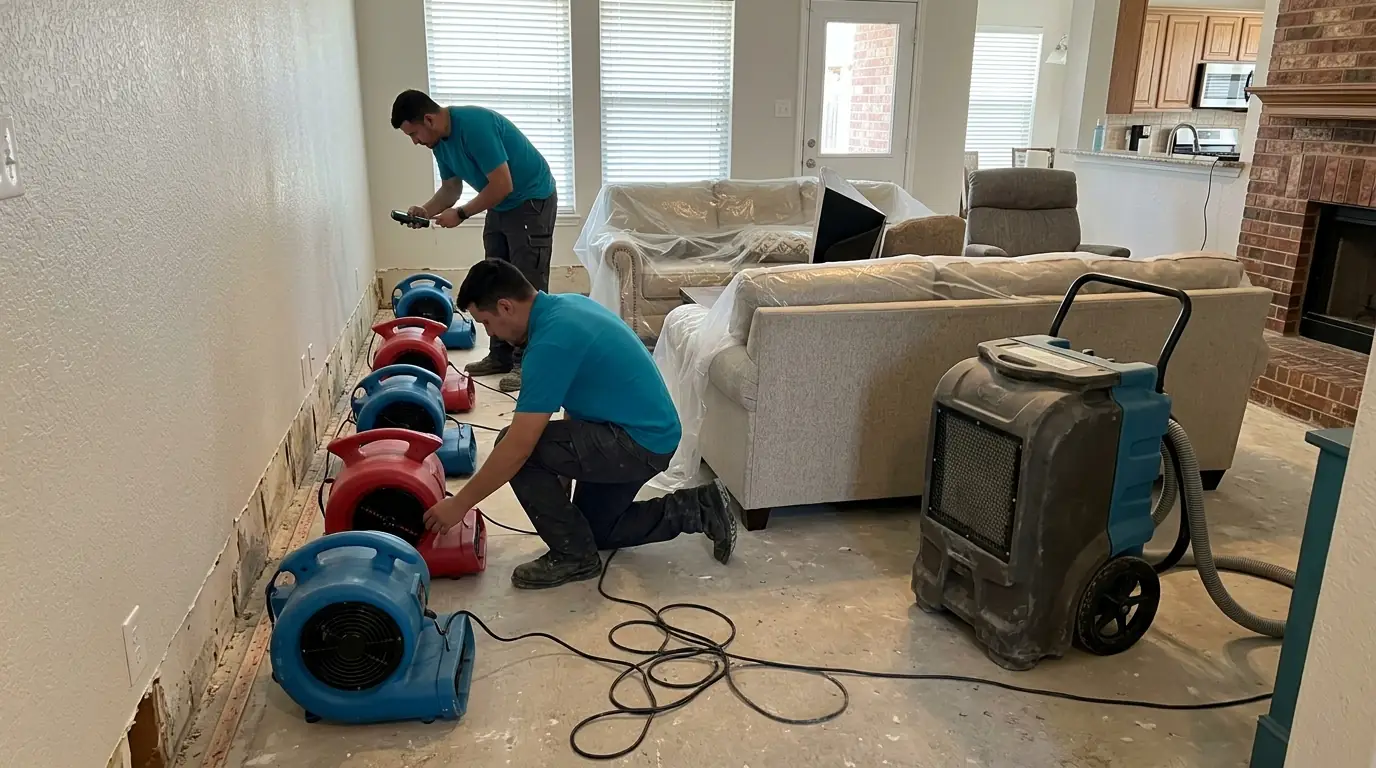
Shut off the main, turn off breakers for any wet rooms and move belongings out of the water. Photograph the damage and keep the split section of pipe. Then call a plumber to repair the line and get water drying started as soon as you can. During a citywide freeze, plumbers get booked for days, and the water in your walls keeps spreading while you wait. Burst pipes usually soak drywall, insulation and flooring all at once. Burst pipe water damage work starts with extracting standing water and mapping moisture, then opening walls and ceilings where readings show water trapped inside. When a sprinkler line freezes and breaks, the cleanup follows the same approach through fire sprinkler water cleanup.
Damage That Shows Up Weeks After a Freeze
Not every freeze break is obvious. A pinhole split in an attic line can drip into insulation for days before the ceiling stains. A cracked fitting inside a wall can leak slowly into the bottom plate. Watch for new ceiling stains, a musty smell, warped baseboards or a water bill that jumps after a freeze. If something seems off, have the area checked with a moisture meter and thermal camera before mold has time to settle in. Our guide on how fast mold grows after a leak explains why a few days can matter.
Questions About This Topic
For most homes that stay heated, a slow drip on faucets along exterior walls is enough. If you're leaving the house during a hard freeze, or the power may go out for a long time, shutting off the main and draining the lines by opening faucets gives more protection. Remember to turn off the water heater first.
The split usually happens while the water is frozen, but ice plugs the crack. When it thaws and pressure returns, water rushes out. That's why many people find leaks a day or two after a freeze. Stay near the house during the thaw and know where your shutoff is.
PEX handles freezing better than copper because it can expand a little, but it isn't immune. Fittings, valves and connections can crack, and PEX can still split in a hard freeze. Treat PEX lines in attics and exterior walls with the same care as any other pipe when a freeze is forecast.
Yes. Attic lines that split drip or spray onto insulation, which soaks up water and presses it into the ceiling drywall. The ceiling may stain, sag or fall. Wet attic insulation usually needs removing, and the ceiling has to be read and dried or replaced.
It can be if you keep it well away from cabinet doors, cleaning products and anything that burns, and never leave it unattended. A hair dryer aimed at the pipe works for small sections. Never use an open flame or a propane torch, which can start a fire inside the wall.
Services Related to This Guide
Need Someone to Look at It Today?
We answer around the clock for Fort Worth and the surrounding area.